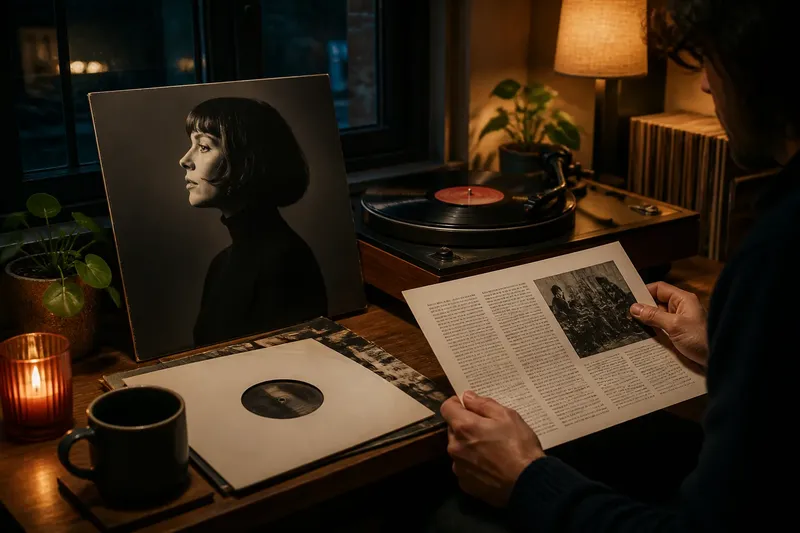
A First Listening Evening with a Newly Found Album
Plan a first listening evening with a newly found album: set a comfortable pace, share the controls, and make room for an easy conversation afterward.
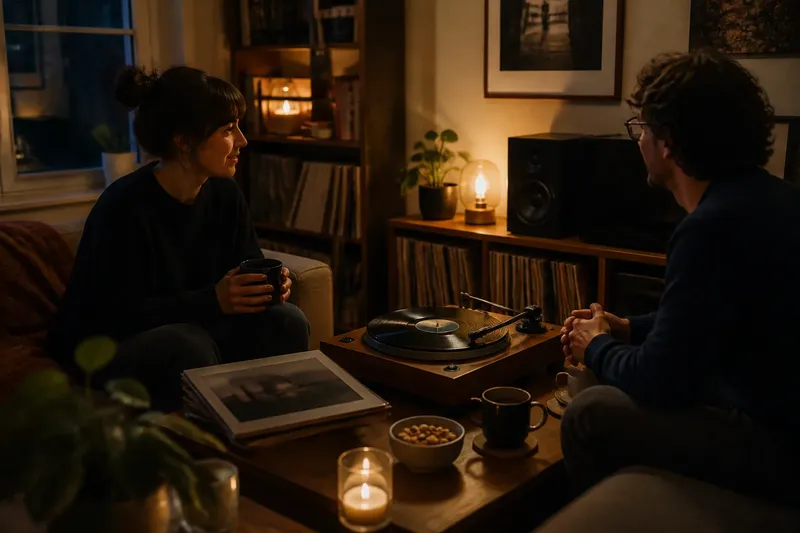
You set a newly found album beside the turntable, and a friend arrives just as you are clearing the coffee table. A first listening evening with a newly found album works best when the music has a place in the gathering, not when the gathering has to revolve around rules.
Choose a comfortable stretch of time, make the playback easy to manage, and agree on how much talking feels right. The shared point is to hear the release together and leave with a moment or question worth returning to.
A relaxed start
Invite one friend or a housemate and say plainly that you would like to hear an album together. There is no need to call it a listening party or prepare an agenda. A solo listen can be just as intentional.
Pick a time when dinner, chores, or a scheduled call will not keep pulling people away. If the full release does not fit the evening, choose a disc or side that makes sense as a stopping point rather than rushing through the music.
Set out comfortable seats and keep drinks and snacks away from the player and media. A casual setting makes it easier for someone to stretch, ask for a pause, or leave when needed.
Prepare the playback
Before anyone arrives, confirm that the turntable or CD player works and that the speakers or headphones are ready. Put the volume control within reach and set a level that lets everyone hear comfortably without having to raise their voices.
Silence phone alerts if you can, and tell anyone sharing the room that you plan to listen for a while. You do not need perfect quiet; the aim is simply to reduce avoidable interruptions.
Keep the controls accessible so a guest can ask for a pause without feeling they are disrupting a performance. For vinyl, be ready to turn the record at the side break; for a multi-disc set, agree which disc you have time to hear.
Set shared expectations
Offer a brief piece of context, such as where you found the release or what made you curious about it. Stick to what you know, then let the music begin without telling your guest what they should notice.
Ask whether people prefer to comment during playback or save reactions until afterward. If you disagree, choose a simple compromise: keep conversation low during a track and pause between tracks for a quick thought. A solo listener can leave the phone aside and follow the sequence without needing to explain each reaction.
Decide together whether to play from the beginning, start with a particular side, or hear one disc. Starting at the beginning is a straightforward choice for an unfamiliar album, but it is not a rule. The useful decision is a sequence everyone has time and interest to follow.
Choose a natural pause
Physical formats provide convenient break points. A record side change or the end of a CD can be a chance to stretch, talk briefly, or stop for the evening. Agreeing on that point in advance helps avoid the feeling that anyone must stay longer than planned.
Say you have a two-disc CD and your friend can stay only for a short visit. You both choose the first disc, listen through it, and stop when it ends; the result is a complete, manageable portion and a clear option to continue another time.
If someone needs a break, pause the player and decide together whether to resume where you stopped or end the listen there. Restarting the whole album after every interruption usually adds effort without helping the conversation.
Questions after playback?
Should you talk during the music?
Ask your guest what feels comfortable before pressing play. If one person wants quiet and another likes brief comments, save conversation for transitions or a planned pause.
What if the album feels unfamiliar?
Let the first listen be uncertain; you do not have to identify every sound or decide whether you like the release right away. Notice a moment that catches your attention and let other questions wait until playback ends.
What if you disagree about a track?
Share what you heard without trying to settle on one correct reaction. A guest may respond to a different part of the music, and that difference can give you both a reason to listen again.
What if plans change?
If someone arrives late or needs to leave, decide whether to wait, pause at a side or disc break, or save the album for another evening. For a solo listen interrupted by a task, stop the player if needed and return when you can give the music attention.
Talk without a quiz
After the last track, leave a little quiet before asking what stood out. Try an open question such as, “What stayed with you?” or “Was there a moment you would replay?” Share your own response as one impression, not as the answer everyone should reach.
If a question about the release comes up, note it and look it up later rather than turning the conversation into a phone search. Details can be interesting when someone is curious, but no one needs to identify every credit or instrument to have listened well.
You can replay a favorite track, turn the music off, or move on to ordinary conversation. None of those choices needs to be treated as the required ending.
Keep a small reminder
Afterward, write down the album title and one detail you want to remember, such as a track that lingered or a question to check. A pocket notebook or a phone note is enough; there is no need to record everyone’s opinions.
If your guest is willing, ask which moment they would hear again. That gives you a natural starting point for another shared listen without asking anyone to rate the album.
Skip the extra production
Elaborate decorations, a written program, and a track-by-track introduction are not worth the effort for one album. They can make a relaxed visit feel like hosting work. Working playback, comfortable seats, and an agreed stopping point do the useful jobs.
You also do not need new equipment or a technical project to make the evening count. If the sound is clearly uncomfortable, adjust the volume or fix the immediate playback issue; otherwise, let the music and company lead.
A first listening evening with a newly found album can be brief, quiet, or full of conversation. Make the sequence manageable, keep the pause option clear, and leave one small opening for a return listen or a question worth checking later.