Vinyl or CD for a Collection You Actually Play?
Vinyl or CD for a collection you actually play? Compare listening routines, playback needs, and handling to choose the format that suits your habits.

You set a record beside the turntable, then realize you only have time for one song before leaving. That small mismatch is a useful clue when choosing vinyl or CD: the right format should suit the way you listen, not just the way you want a collection to look.
Match your listening style
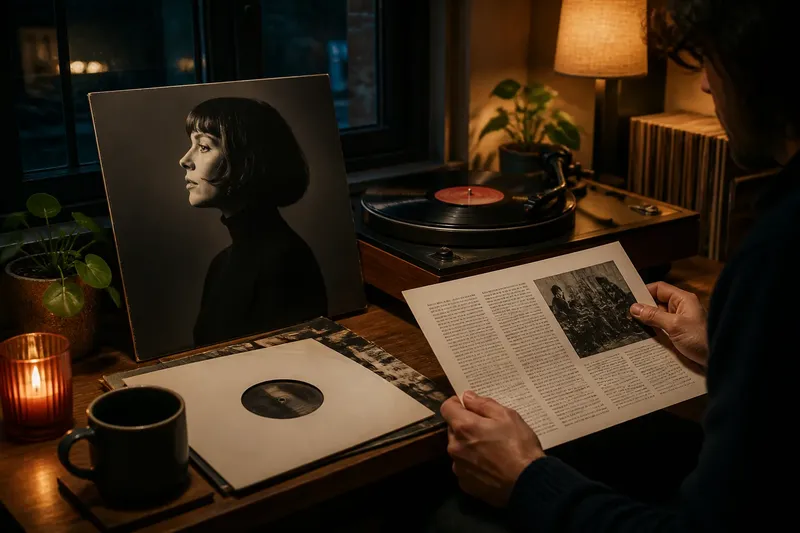
Vinyl tends to suit an album session. You choose a record, lower the tonearm, and turn the disc when a side ends. If you enjoy hearing an album in sequence and like the pause between sides, that routine can be part of the pleasure.
CDs make it simpler to jump to a track, repeat a song, or start listening without tending to a turntable. Player controls vary, so check the model you plan to use. For music that accompanies cooking, desk work, or a short break, direct track access may be more useful than a side-long session.
Ask yourself what you do once playback starts. If you often skip between songs or leave the room, CD may fit better. If you usually settle in for an album and enjoy handling the release, vinyl may feel more satisfying.
Compare the listening experience
The formats invite different kinds of attention. Vinyl puts the record and its sleeve in your hands, and changing sides gives an album a natural pause. A CD offers a smaller object and more immediate access to individual tracks, but the artwork and printed material are usually less prominent in the listening routine.
Neither choice dictates how an album sounds in every home. Playback equipment, the particular release, and the condition of the disc or record all matter. If sound quality is your main concern, listen to the specific editions through equipment you can use comfortably rather than assuming one format always sounds better.
It is also fine to give each format a different job. You might prefer records for albums you play from start to finish and CDs for releases you revisit song by song. Buying both versions makes sense only if you have a reason to use each one.
Check playback equipment
A record requires a turntable and an audio system that can accept its signal. Depending on the equipment, that may mean a built-in phono stage or a separate one, along with speakers or headphones. Check the turntable and amplifier manuals before buying records for a setup that is not ready.
A CD needs a compatible player or another device with a disc drive. Some stereos and computers can play discs, while others cannot; verify the equipment rather than assuming it has a drive. Speakers or headphones may still be needed, but a CD player can be a simpler starting point if it is already part of your system.
Consider the complete listening action, not just the player: where you will place it, how you will choose an album, and what you must do when the session ends. A format that requires several awkward workarounds may be less appealing than one that works with the equipment at hand.
Choose for your routine
- Check your usual session: If you tend to play full albums, then consider vinyl; if you often choose individual songs, then consider CD.
- Check your available player: If you already have a working turntable system, then vinyl is ready to use; if you have a compatible CD player, then CD is the simpler starting point. If neither is available, compare the complete setup before choosing.
- Check how you handle music: If you enjoy placing a record and turning it over, then vinyl may suit you; if you prefer selecting tracks with controls, then CD may be easier. If neither routine appeals, reconsider before buying either format.
- Check your listening location: If you have a stable surface and a ready turntable, then vinyl is practical there; if you listen at a desk or move between rooms, then CD may fit better if a compatible player is available. Otherwise, choose the location where playback is easiest.
- Check your interest in artwork: If large sleeves are part of the appeal, then vinyl offers a more visible presentation; if artwork is secondary to track access, then CD may be enough. If neither matters, decide by playback habits instead.
- Check your tolerance for handling: If you are comfortable setting a record down carefully and changing sides, then vinyl is a reasonable fit; if you want a quick start and fewer handling steps, then CD may suit you. If both feel fine, let the player you own decide.
Say you have a compact stereo with a CD player, a turntable still boxed away, and a habit of listening to a few songs while making dinner. You start by checking that the stereo plays discs, then choose a CD and use its track controls during cooking. The observable result is a session that fits the time available without unpacking or setting up another player; the tradeoff is that a full-album vinyl routine remains an option for another occasion.
Questions about vinyl or CD?
Which format is easier for choosing a track?
CD is generally more direct for selecting a particular song, provided the player has track controls. Vinyl usually asks you to locate the track on the record and handle the tonearm, so it favors a less interrupted session.
Does vinyl always sound better than CD?
No single format sounds best in every setup or for every release. The pressing or disc, playback equipment, and your listening preferences all affect what you hear, so compare the editions you are considering when possible.
Can one player handle both formats?
Some audio systems accept both a turntable and a CD player, but the formats need different playback devices. Check the inputs and manuals for your equipment; a turntable may also need a phono stage that a CD player does not.
Is it sensible to collect both?
It can be, if you have a listening reason for each format and compatible equipment for both. For instance, you might use records for album sessions and CDs for track selection, rather than buying duplicate editions by default.
Skip unnecessary upgrades
It is not worth buying extra equipment just because one format seems more serious or collectible. Nor is there much point in owning both versions of an album if one will sit unused. Start with a player you can operate comfortably and notice which listening routine you actually enjoy.
When choosing vinyl or CD, focus on what happens between picking an album and pressing play. The format that fits your listening habits and available equipment is the one most likely to get used. If your routine changes, you can add the other format for a specific purpose rather than treating the choice as permanent.