The Alphabetical Shelf Myth: Organizing Music Beyond Artist Names
Organize a music collection around the clues you remember, then use simple labels and a small index to find releases without searching every shelf.
You want the live soul album you played last weekend, but the shelf is alphabetized by artists whose names have slipped your mind. To organize a music collection around the way you actually search, build a clear route from your first remembered clue to one physical home for each release.
Notice your search clues
Before moving anything, pay attention to what you remember when choosing music: an artist, an album title, a lyric, a place you heard it, or a loose description such as “quiet piano.” Those first clues—not an abstract filing rule—should shape the route you make through the collection.
When you hesitate during an ordinary search, jot down the clue you started with and where you expected to look. A scrap of paper beside the shelf is enough. You are looking for recurring snags, not building a record of every listening session.
Say you repeatedly search for a song from a film but remember neither the performer nor the album title. If the release is filed under a composer’s surname, that route may not help; a “soundtracks” divider or a searchable note can connect the clue you remember to its location.
Choose one search route
Pick a primary order for the section you are organizing. You might file by artist, album title, broad genre, or a listening queue such as “next to hear.” Keep the choice tied to a question you can answer quickly: what would you think of first when you reach for one release?
Use familiar words for categories. Broad labels such as “jazz,” “folk,” and “soundtracks” are easier to scan than a finely divided taxonomy that requires you to remember its rules. If a release fits several categories, place it where you would look first rather than trying to settle every boundary.
Keep the physical home and the search route distinct. This is not a reason to create duplicate copies or reorganize around storage formats; it is a way to make the label, shelf order, or index point toward the release’s single location.
Build useful signposts
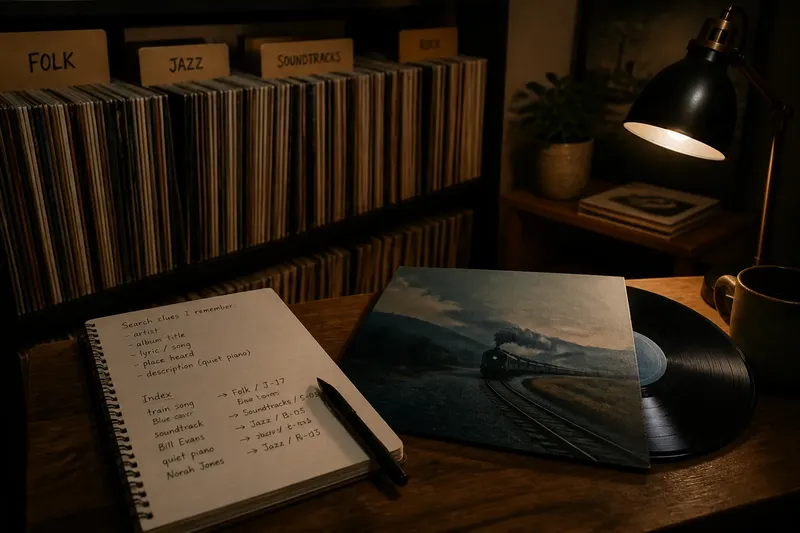
Give each release one home, then add only the signposts that solve a real search problem. Divider cards can mark broad sections. A notebook, spreadsheet, or notes app can connect an alternate clue—such as a soundtrack title or a guest musician—to the shelf location.
Keep index entries simple: artist, title, and location are often enough, with one extra search term when you need it. If you will not update a tool when a release moves, use shelf labels instead. A system that stays current is more useful than a detailed catalog that quietly points to the wrong place.
Make labels short and readable from where you browse. For names that cause repeated confusion, choose one convention—such as filing under the name printed on the release—and add a note for the alternate name you tend to remember. Apply the same rule to later arrivals.
Check each shelf decision
Use this quick check when adding a release or changing a label. Each result should lead to a clear action rather than another round of sorting.
- Check the clue you would use first; if it matches an existing section, file the release there, or create a broader label if no section fits.
- Check whether a similar release already has a home; if it does, follow that placement rule, or write a brief rule before filing the new one.
- Check whether you would search by a second clue; if you would, add one index term, or leave the entry simple if the alternate route is unlikely.
- Check whether the divider is easy to spot while browsing; if it is readable, keep it, or rewrite it in larger, plainer words.
- Check whether the index still matches the shelf location; if it does, leave it alone, or update the location before putting the release away.
- Check whether a proposed new category has a clear purpose; if it separates items you regularly seek together, add it, or keep those items in a broader section.
When does the route need changing?
Should I alphabetize by artist or album?
Choose artist order if the performer is usually the first name you remember; choose album order if titles come to mind more readily. Keep the chosen rule consistent, and use an index entry for the other clue when you often search by both.
Where should compilations go?
Use a compilation section if you commonly browse those releases together. Otherwise, file each one under the style or performer you would look for first, and note that location if the title is hard to find by that route.
How should I file releases with several artists?
Pick one predictable rule, such as filing under the first credited artist or under a “various artists” heading. If you often remember a different performer, add that name as a search term rather than giving the release another physical home.
What if I keep forgetting where a release is?
Notice the clue you remember and add that exact term to a short index entry. If you still cannot find the release during a normal search, revise the signpost or label that failed instead of rebuilding the whole collection.
Work through one search
Imagine you have a small, invented collection and remember a release only as “the blue-cover record with the train song.” You first scan the “folk” section, where you previously placed it by broad style, but do not see the title; the current route has failed.
You check your notes for “train song” and find an entry pointing to the folk section. You locate the release, then update the entry with its album title and artist while keeping its existing home. The next time that lyric clue comes to mind, the note gives you a direct route without creating another category or moving neighboring records.
It is not worth the effort to redesign every section whenever a new label occurs to you, or to catalog details you never use to search. Change one signpost when a real search stalls, then organize a music collection so the clue you remember leads to the place you expect.