From Record Shops to Collector Fairs: Where the Hobby Gathered
Record shops and collector fairs turn browsing into a shared music hobby, with simple ways to start conversations, trade thoughtfully, and find your place.
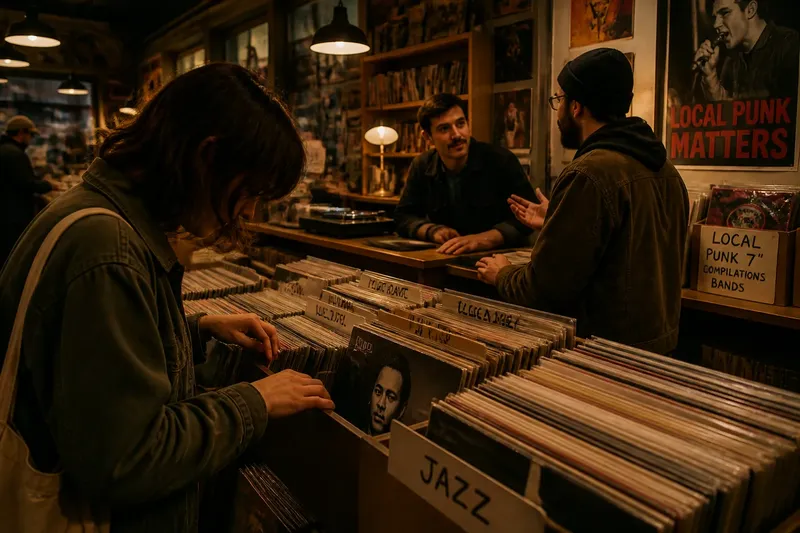
At a neighborhood record shop, one person flips through the jazz bin while another asks the clerk where to find local punk releases. Record shops and collector fairs make music collecting social by giving people a place to browse, compare discoveries, and exchange knowledge. No single shop or gathering began the pastime; it grew wherever listeners could meet around the same releases.
Start with the shop
A record shop offers a simple first outing because you can browse at your own pace. The shelves provide common ground, and a question about an artist or label can open a conversation without requiring you to know the regulars.
Before you go, choose a loose focus: a genre, a local label, a particular artist, or a format you enjoy. This gives your browsing direction without turning the visit into a hunt for a specific prize. Bring a short list on your phone if you tend to forget names, but leave room for an unfamiliar sleeve or recommendation.
Move through one section slowly. Check the artist, release title, label, and format on an item that catches your eye; then ask a staff member if you are unsure what you are looking at. A concise question such as “Is this a local release?” is easier to answer than a request to explain an entire genre.
Read the room
Shops have their own rhythms. Some invite long conversations at the counter; others are busiest when people are making quick purchases. Notice whether staff and customers seem available before starting an extended discussion, and avoid blocking a bin while you talk.
Being a good browser helps keep the space welcoming. Return records to the right section, handle them by their edges, and ask before opening a sealed copy. If you pull several items to compare, keep track of where they came from so they can be put back neatly.
Say you visit a small shop looking for a particular soul album and find a compilation from a nearby label instead. You ask the clerk whether the label has other releases, then jot down two names to explore later. The useful result is not a purchase; it is a clearer path into a local scene and a natural reason to return.
Find a fair
Collector fairs bring many sellers and tastes into one room, so they suit a different kind of browsing. You can compare stock across tables, ask about an item’s edition or condition, and hear how another collector describes a record you have only encountered online.
Look for events through shop notices, community calendars, library bulletin boards, and local music groups. A fair may focus on records, but some include CDs, tapes, books, or memorabilia; check the event description so you know what kind of tables to expect. If you are new, arriving with a friend can make the first lap feel less awkward, though going alone gives you more freedom to follow your interests.
On arrival, take a quick walk around before buying. Note which tables match your interests, where the aisles are, and whether a seller has a clear way to handle questions. Then revisit a few tables with a more focused eye. A first circuit helps you see the range on offer before you spend your attention or money.
Trade with care
Exchanging releases can turn an encounter into an ongoing connection, but it works best when expectations are clear. If you bring something to trade, describe its condition plainly and say whether you are looking to swap, sell, or simply show it. Keep the conversation friendly if the other person is not interested.
When considering an exchange, compare the specific items rather than assuming two records are equivalent because they share an artist or genre. Check the release information and visible condition together, and agree on any difference in value before handing anything over. For a trade arranged through a local group, choose a public meeting place and keep the agreement in the messages.
Not every interaction needs to lead to a deal. Asking what someone listens for in a particular label, or sharing a recommendation that fits their interests, can be a satisfying exchange on its own.
Build familiar ties
Once you have found a shop or event you like, familiarity grows through small, repeatable gestures. Remember a seller’s name if it comes up naturally, mention a release you followed up on, or thank someone for a useful recommendation. You do not need to present yourself as an expert; curiosity and attentiveness carry a conversation.
Collectors also gather in listening groups, neighborhood record clubs, and informal meetups hosted by shops or community spaces. These settings give people a reason to bring a release and talk about what draws them to it. Ask about the format and mood of an event before attending so you can choose one that suits your comfort level.
What is not worth the effort is treating every visit as a networking task or trying to impress people with rare finds. That approach can make browsing feel like a performance. A shared interest is enough to begin; trust and conversation usually develop through repeated, ordinary contact.
Questions about collecting together?
How do I start a conversation at a record shop?
Ask a specific, open question about a release, genre, or section, and give the other person room to answer briefly. If they seem busy, thank them and continue browsing.
What should I bring to a collector fair?
Bring a short list of artists or releases you are curious about, plus a way to make notes. If you intend to trade, bring only items you are comfortable parting with and be ready to describe their condition honestly.
How can I find local music collecting groups?
Ask independent record shops about clubs or meetups, and check community boards and local music groups for public events. Read the event details before attending so you know whether it is a listening session, a sale, or a trade gathering.
Do I need rare records to fit in?
No. People come to shared collecting spaces with different budgets, collections, and levels of experience. A thoughtful question or a recommendation you genuinely enjoy gives others more to respond to than a display of expensive finds.
Make the next visit easy
Choose one nearby shop or fair, set a modest goal for the visit, and leave time to browse without rushing. You might ask about one local label, find out when a regular event takes place, or simply learn which section holds the music you like. Record shops and collector fairs remain useful gathering places because each visit can add a conversation as well as a release to your musical life.